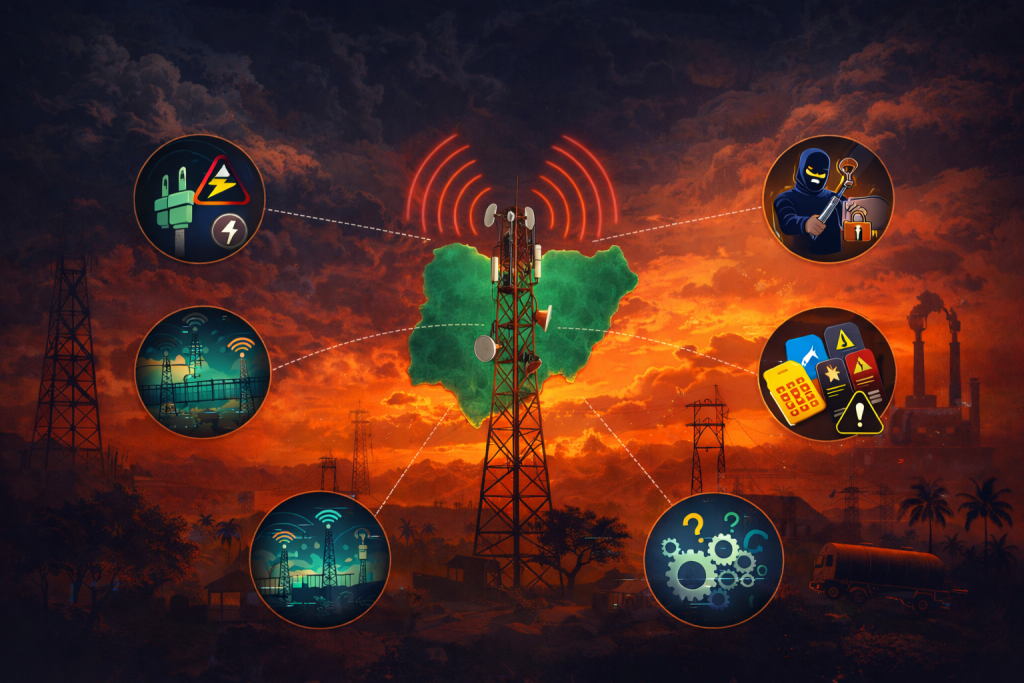
Nigerian businesses deploying IoT projects in remote locations face challenges extending far beyond sensor selection or platform capabilities. Specifically, organizations monitoring oil and gas infrastructure in the Niger Delta, tracking agricultural operations across northern states, or managing telecommunications equipment in rural areas discover that connectivity assumptions working perfectly in Lagos break down completely in remote deployments. Consequently, what succeeded during controlled pilots often fails when devices operate beyond reliable cellular coverage, far from technical support, and in environments where site visits cost substantial time and money.
Moreover, these failures rarely stem from sensor malfunctions or analytics platform limitations. Instead, remote IoT deployment struggles emerge from fundamental misalignments between terrestrial connectivity assumptions and remote operational realities. For instance, protocols designed for always-on cellular connectivity consume excessive power and airtime over constrained networks. Similarly, security architectures appropriate for urban deployments create integration bottlenecks when adapted to remote satellite or multi-carrier configurations. Therefore, Nigerian enterprises must recognize that successful remote IoT integration requires deliberately designing around constraints rather than simply replicating urban deployment approaches.
This article examines the recurring mistakes undermining remote IoT deployment in Nigeria, explores how African telecommunications infrastructure challenges compound these issues, and provides practical guidance enabling Nigerian businesses to build sustainable remote monitoring solutions. Specifically, we address connectivity architecture decisions, protocol selection, lifecycle management, and cost optimization strategies essential for IoT projects in Nigeria operating beyond consistent terrestrial network coverage.
1. Nigerian Remote Deployment Realities
Infrastructure Challenges Beyond Urban Centers
Nigerian businesses often design IoT connectivity strategies based on urban network experiences in Lagos, Abuja, or Port Harcourt where multiple carriers provide overlapping 4G coverage. However, remote deployments encounter dramatically different conditions. Specifically, rural areas frequently have single-carrier coverage or complete cellular gaps, power infrastructure proves unreliable requiring backup generators or solar solutions, physical access difficulties make site visits expensive and time-consuming, and environmental factors including weather, terrain, and vegetation affect signal reliability.
[SUGGESTED IMAGE PLACEMENT: Map showing Nigerian cellular coverage density contrasting urban Lagos versus remote Niger Delta, northern agricultural regions, and rural telecommunications sites]
For example, a Nigerian oil company deploying remote monitoring solutions across Niger Delta facilities cannot assume consistent MTN or Airtel coverage. Instead, connectivity varies dramatically by specific location, with some sites receiving intermittent signals from single carriers while others sit in complete coverage gaps requiring satellite connectivity. Therefore, assuming urban network reliability for remote deployments guarantees integration failures and operational disappointments.
Cost Implications of Remote Operations
Furthermore, remote IoT deployment in Nigeria carries distinctive cost structures compared to urban implementations. Specifically, site visits to remote locations involve substantial transportation expenses, extended travel times, potential security considerations, and accommodation costs for multi-day visits. Consequently, any deployment approach requiring frequent site visits for troubleshooting, configuration updates, or maintenance quickly becomes economically unsustainable.
Additionally, connectivity costs differ significantly between urban and remote contexts. While urban deployments utilize standard cellular IoT Nigeria data plans with predictable pricing, remote locations may require satellite connectivity charging premium rates per megabyte or specialized roaming SIMs with higher costs but necessary multi-carrier capabilities. Therefore, Nigerian businesses must explicitly account for these cost differentials when evaluating remote IoT deployment ROI.
Regulatory and Compliance Considerations
Moreover, remote IoT deployments in certain Nigerian sectors face additional regulatory scrutiny. For instance, oil and gas operations must comply with Department of Petroleum Resources environmental monitoring requirements, telecommunications infrastructure requires Nigerian Communications Commission (NCC) compliance for remote site monitoring, and mining operations face regulatory mandates for safety and environmental oversight. These compliance requirements often mandate continuous monitoring capabilities precisely in remote locations where connectivity proves most challenging.
2. The Multi-Carrier Connectivity Imperative
Why Single-Carrier Approaches Fail Remotely
Nigerian businesses deploying remote IoT solutions frequently discover that single-carrier connectivity strategies proving adequate in urban areas fail completely in remote contexts. Specifically, while MTN might dominate coverage in Lagos, Airtel could provide the only usable signal at a particular remote site. Similarly, coverage from any individual carrier may prove intermittent or unreliable at specific locations despite appearing adequate on coverage maps.
Consequently, remote IoT deployment demands multinetwork SIM solutions enabling automatic switching between available carriers. When devices equipped with universal SIM cards detect weakening signals from one carrier, they automatically connect through alternative networks without requiring manual intervention or physical SIM replacement. Therefore, this multi-carrier connectivity approach transforms remote deployments from experiencing frequent connectivity failures to maintaining reliable data transmission across diverse locations.
Practical Implementation for Nigerian Operations
Moreover, implementing multi-carrier connectivity for Nigerian remote IoT deployment requires specific technical considerations. First, devices must incorporate modems supporting multiple frequency bands used by Nigerian carriers including MTN, Airtel, Glo, and 9mobile. Second, universal SIM provisioning must include network profiles for all relevant carriers with appropriate roaming agreements. Third, SIM management platforms must provide visibility into which carriers devices actually use, enabling optimization based on real-world performance rather than coverage map assumptions.
For example, a Nigerian agricultural operation deploying soil moisture sensors across farms in Kano, Kaduna, and Plateau states should implement roaming SIMs with multi-carrier support. Subsequently, sensors automatically connect through whichever carrier provides strongest signals at specific locations, with the SIM management platform tracking carrier usage patterns. Therefore, operators gain visibility into actual network performance while ensuring continuous connectivity regardless of location-specific carrier limitations.
Cost Optimization Through Intelligent Routing
Additionally, multinetwork SIM solutions enable cost optimization for remote IoT deployment through intelligent network selection. Specifically, SIM management platforms can configure devices to prefer lower-cost carriers when multiple options provide adequate signal quality, falling back to premium options only when necessary. Moreover, platforms can set data limits or throttling rules preventing unexpected costs from device malfunctions or misconfigurations.
For Nigerian businesses operating across multiple regions with varying carrier pricing and coverage, this intelligent routing delivers measurable cost savings. Rather than paying premium satellite connectivity costs everywhere, devices utilize cellular M2M connectivity Africa wherever available, escalating to satellite only when terrestrial options prove inadequate.
3. Protocol Selection for Constrained Environments
Why Cellular Protocols Fail in Remote Contexts
Many Nigerian IoT projects adopt protocols and communication patterns designed for always-on cellular connectivity without considering remote deployment constraints. Specifically, protocols assuming rapid handshakes, persistent connections, and immediate acknowledgments consume excessive power when operating over intermittent or high-latency connections. Consequently, battery-powered remote sensors expecting year-long operation drain batteries in months due to protocol inefficiencies.
[SUGGESTED IMAGE PLACEMENT: Comparison chart showing data consumption and battery life for chatty protocols versus optimized messaging approaches in remote Nigerian deployments]
For example, an IoT application implementing HTTP-based polling where sensors request updates every few minutes might work acceptably in Lagos with consistent 4G connectivity. However, the same approach deployed to remote telecommunications towers in Taraba State consuming substantial power for connection establishment, polling overhead, and retry attempts when signals drop proves operationally unsustainable.
Messaging Strategies for Nigerian Remote IoT
Instead, successful remote IoT deployment in Nigeria implements messaging strategies optimized for constrained connectivity. Specifically, devices should report by exception rather than continuous polling, transmitting data only when meaningful changes occur or at extended intervals. Moreover, messages should use compact binary protocols rather than verbose JSON or XML formats, minimizing data transmission requirements. Additionally, devices should implement store-and-forward buffering, accumulating data locally during connectivity outages and transmitting when connections restore.
For instance, remote monitoring solutions for Nigerian cell towers might transmit generator status, battery health, and alarm conditions through compact binary messages every hour when all parameters remain within normal ranges. However, when anomalies occur—generator failure, low fuel, or battery degradation—devices immediately transmit alert messages regardless of scheduled intervals. Therefore, operators receive critical information promptly while minimizing overall data consumption and power requirements.
Edge Processing Reduces Transmission Requirements
Furthermore, edge processing capabilities enable remote IoT deployments to dramatically reduce data transmission needs. Specifically, rather than streaming raw sensor data to cloud platforms for analysis, devices can analyze data locally and transmit only insights or exceptions. For example, vibration monitoring on remote equipment might process sensor data locally, transmitting detailed waveforms only when detected patterns indicate developing problems while sending summary statistics during normal operation.
This approach proves particularly valuable for Nigerian businesses where remote connectivity costs substantially exceed urban rates. By processing data at the edge and transmitting minimal payloads, organizations maintain analytical capabilities while controlling ongoing connectivity expenses essential for sustainable remote IoT deployment.
4. Security Architecture for Multi-Network Deployments
Beyond Encryption: Holistic Security Design
Nigerian businesses often assume that implementing encryption for data transmission addresses security requirements for remote IoT deployment. However, comprehensive security architectures must address threats beyond data interception. Specifically, organizations must secure device provisioning preventing unauthorized devices from accessing networks, implement authentication mechanisms preventing device spoofing or hijacking, establish access controls limiting what compromised devices can access, and maintain update mechanisms enabling security patches for deployed devices.
Moreover, remote deployments using multinetwork SIM solutions create security considerations around carrier switching and roaming. When devices automatically switch between MTN, Airtel, Glo, and potentially satellite networks, security policies must remain consistent across connectivity pathways. Therefore, security architectures cannot depend on carrier-specific implementations but must implement end-to-end protection independent of underlying networks.
Integration Boundaries Require Particular Attention
Additionally, the boundary between connectivity infrastructure and backend applications represents a critical security consideration for Nigerian remote IoT deployments. Specifically, data arriving through cellular IoT Nigeria networks or satellite links must integrate with cloud platforms, analytics systems, and business applications. Therefore, security architectures must address VPN configurations, firewall rules, IP addressing schemes, and authentication protocols at these integration points.
For example, a Nigerian logistics company implementing fleet tracking across remote routes must ensure that devices connecting through various carriers all authenticate properly to backend systems. Moreover, the architecture should prevent compromised devices from accessing unrelated systems or data. Therefore, deliberate security design at integration boundaries proves essential rather than assuming default configurations provide adequate protection.
SIM Management Platform Security
Furthermore, SIM management platforms themselves represent critical security infrastructure requiring protection. These platforms control device connectivity, configure network access, and monitor usage patterns. Consequently, compromised SIM management access could enable attackers to disable device connectivity, redirect data flows, or generate unexpected costs through unauthorized usage.
Therefore, Nigerian businesses deploying remote IoT solutions should implement strong authentication for SIM management platform access, role-based access controls limiting user permissions, audit logging tracking all configuration changes, and regular review processes identifying suspicious activity. As a result, organizations maintain security throughout their remote IoT deployment infrastructure rather than focusing solely on device or application security.
5. Lifecycle Management for Inaccessible Devices
Remote Management as Core Requirement
Nigerian remote IoT deployment faces a fundamental challenge: once devices deploy to distant locations, physical access becomes prohibitively expensive or impractical. Consequently, lifecycle management capabilities enabling remote device configuration, troubleshooting, and updates transition from convenient features to absolute requirements. Specifically, organizations must implement over-the-air (OTA) update capabilities for firmware and configuration, remote diagnostic tools providing visibility into device health and connectivity status, remote restart capabilities recovering from certain failure modes, and configuration management preventing drift across device populations.
For example, a Nigerian oil company with monitoring equipment across dozens of Niger Delta facilities cannot dispatch technicians for routine configuration updates or minor troubleshooting. Instead, the remote IoT deployment must enable all routine management tasks remotely through cellular M2M connectivity Africa or satellite links. Therefore, comprehensive lifecycle management capabilities must be established before deployment rather than added reactively after discovering physical access limitations.
Managing Connectivity Costs During Operations
Moreover, lifecycle management activities themselves consume connectivity resources requiring careful planning. Specifically, firmware updates, diagnostic log uploads, and configuration synchronization all transmit data through the same multinetwork SIM connections used for operational monitoring. Consequently, organizations must budget connectivity capacity and costs for both operational telemetry and management overhead.
[SUGGESTED IMAGE PLACEMENT: Breakdown chart showing data consumption allocation between operational monitoring, routine health checks, and lifecycle management activities for Nigerian remote IoT deployment]
For Nigerian businesses where remote connectivity carries premium costs, this planning proves particularly important. Specifically, SIM management platforms should enable scheduling non-critical updates during low-cost periods, prioritizing operational telemetry over routine management traffic, and compressing or batching management data minimizing transmission requirements. Therefore, organizations maintain necessary lifecycle management capabilities while controlling associated connectivity costs.
Configuration Management Prevents Drift
Additionally, remote IoT deployment across multiple Nigerian locations risks configuration drift where devices gradually diverge from intended settings through incremental changes, local adjustments, or inconsistent update application. This drift creates troubleshooting complexity, inconsistent behavior, and support challenges as devices no longer behave predictably.
Therefore, successful Nigerian remote IoT deployments implement configuration management treating device settings like version-controlled code. Specifically, organizations should maintain baseline configurations for device types, track all changes with approval workflows, implement staged rollout procedures testing changes on subsets before broad deployment, and maintain inventory systems documenting which devices run which configuration versions. Consequently, when issues arise, operators can quickly identify configuration differences potentially causing problems rather than troubleshooting unique device states.
6. Data Strategy for Constrained Connectivity
Defining Purpose Before Collection
Nigerian businesses deploying remote IoT solutions often default to collecting comprehensive data assuming more information provides better insights. However, remote deployments where connectivity costs substantially exceed urban rates require disciplined data strategies. Specifically, before deployment, organizations should define what specific decisions data will inform, identify minimum data requirements supporting those decisions, design compact payload formats eliminating unnecessary information, and establish transmission schedules balancing timeliness against cost.
For example, rather than continuously streaming temperature, pressure, and flow data from remote oil field equipment, Nigerian operators should identify specific thresholds or patterns indicating actionable conditions. Subsequently, devices transmit detailed data only when approaching those thresholds while sending summary statistics confirming normal operation during routine periods. Therefore, operators maintain necessary visibility while dramatically reducing data transmission costs through disciplined strategy.
Prioritization and Quality of Service
Moreover, not all IoT data carries equal importance. Specifically, critical safety alerts, equipment failures, or security events require immediate transmission regardless of connectivity conditions or costs. In contrast, routine status updates, historical trend data, or diagnostic information can tolerate delays without operational impact. Therefore, remote IoT deployment should implement data prioritization ensuring critical information transmits immediately while deferring less urgent data until favorable connectivity or cost conditions.
For Nigerian telecommunications companies monitoring remote cell towers, this might mean immediately transmitting generator failure alerts or security intrusion events through any available connectivity including premium satellite links. Meanwhile, routine battery health trends or environmental conditions could accumulate locally and transmit during scheduled cellular connectivity windows when costs prove lower. Consequently, operators receive critical information promptly while controlling overall connectivity expenses.
Local Intelligence Reduces Transmission Needs
Furthermore, incorporating intelligence into edge devices enables remote IoT deployments to reduce data transmission substantially. Specifically, rather than streaming raw sensor readings for cloud-based analysis, devices can implement local algorithms detecting patterns, anomalies, or thresholds warranting transmission. For instance, remote equipment monitoring might analyze vibration patterns locally, transmitting alerts only when detected signatures indicate developing problems while confirming normal operation through minimal heartbeat messages.
This edge intelligence proves particularly valuable for Nigerian businesses where remote connectivity costs can rapidly consume operational budgets. By processing data locally and transmitting only insights or exceptions, organizations maintain analytical capabilities while controlling costs essential for sustainable remote IoT deployment across distributed operations.
7. Validation and Ongoing Optimization
Field Testing Before Scale
Nigerian businesses should resist deploying remote IoT solutions at full scale before thoroughly validating under actual operating conditions. Specifically, pilot deployments to representative remote locations reveal connectivity reliability, power consumption patterns, protocol performance, and integration challenges that laboratory or urban testing cannot uncover. Moreover, pilots enable measuring actual costs rather than relying on theoretical estimates.
For example, a Nigerian agricultural operation planning remote monitoring across multiple states should initially deploy to representative farms testing connectivity through local carriers, validating battery life under actual usage patterns, confirming data transmission costs align with projections, and verifying that remote management capabilities function reliably. Subsequently, these validated configurations can confidently scale to broader deployment, avoiding costly mistakes discovered only after deploying hundreds or thousands of devices.
Monitoring What Actually Matters
Additionally, ongoing monitoring must extend beyond simply confirming devices remain alive to tracking metrics indicating developing problems. Specifically, Nigerian remote IoT deployments should monitor connectivity quality including signal strength, failed transmission attempts, and carrier usage patterns, power trends identifying devices consuming battery faster than expected, data usage spotting anomalies suggesting configuration issues, and performance metrics confirming applications receive expected data timeliness and completeness.
For instance, a device showing “connected” status but experiencing declining signal strength and increasing retry attempts indicates developing problems warranting investigation before complete failure occurs. Therefore, proactive monitoring enables addressing issues through remote management before requiring expensive site visits for physical intervention.
Continuous Cost Optimization
Finally, Nigerian businesses should continuously optimize remote IoT deployment costs based on operational experience. Specifically, analyzing which locations actually use satellite connectivity versus cellular, identifying devices consuming excessive data suggesting configuration optimization opportunities, evaluating whether consolidated transmission schedules reduce costs, and reviewing whether carrier selection strategies align with actual performance patterns all enable ongoing cost improvements.
For example, if analysis reveals certain locations consistently connect through premium carriers despite adequate coverage from lower-cost alternatives, configuration adjustments preferring specific carriers can reduce costs. Similarly, if certain device types transmit more data than necessary for operational requirements, payload optimization or transmission schedule adjustments can meaningfully impact overall connectivity expenses across large fleets.
Conclusion and Call-to-Action
Remote IoT deployment in Nigeria presents distinctive challenges requiring approaches fundamentally different from urban implementations. Specifically, connectivity assumptions valid in Lagos or Abuja break down completely in remote locations where single-carrier coverage proves inadequate, power constraints demand efficiency, and physical access limitations make remote management essential rather than optional. Therefore, Nigerian businesses must deliberately design around these constraints rather than attempting to adapt urban deployment strategies proving inadequate in remote contexts.
Successful remote IoT deployment starts with robust multinetwork SIM solutions ensuring reliable connectivity regardless of location-specific carrier limitations. Subsequently, organizations must implement messaging protocols optimized for constrained environments, comprehensive security architectures protecting multi-network deployments, lifecycle management enabling remote device operations, and disciplined data strategies controlling ongoing connectivity costs. Moreover, thorough field validation before scaling and continuous optimization based on operational experience ensure deployments remain sustainable and cost-effective.
Nigerian enterprises across oil and gas, agriculture, telecommunications, and logistics sectors require reliable remote monitoring solutions operating across challenging infrastructure environments. However, achieving this reliability demands connectivity providers understanding African telecommunications realities and offering solutions addressing these specific challenges.