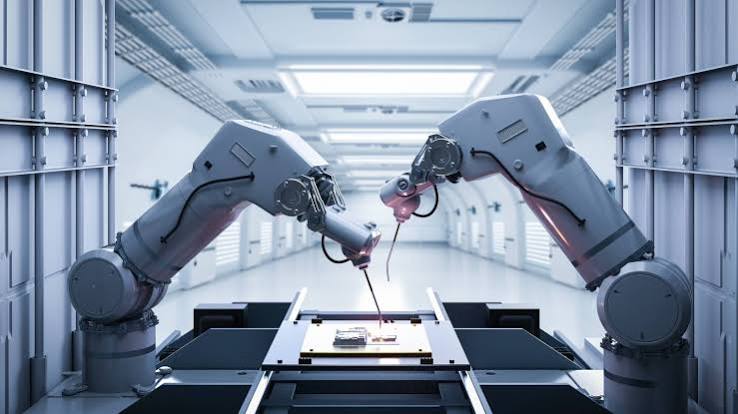
Industrial automation is rapidly transforming how businesses operate across the world. From manufacturing plants and logistics hubs to banking infrastructure and energy facilities, organizations are increasingly deploying connected technologies to improve efficiency, reduce downtime, and gain real-time visibility into operations.
In Nigeria, automation is becoming more important as businesses face rising operational costs, infrastructure challenges, and growing customer expectations. Companies are looking for smarter ways to manage equipment, monitor assets, and maintain service reliability without increasing overhead costs.
At the center of this transformation is IoT connectivity. Connected devices, sensors, and machines require reliable communication to exchange data and support automated decision-making. As more organizations embrace Industry 4.0 technologies, robust connectivity solutions are becoming essential for success.
This article explores the growth of industrial automation in Nigeria, the technologies driving adoption, the connectivity challenges businesses face, and how reliable IoT infrastructure can support long-term digital transformation.
1. What Is Industrial Automation?
Industrial automation refers to the use of technology, software, sensors, and communication systems to perform operational tasks with minimal human intervention.
Modern automation systems combine:
- Industrial IoT devices
- Sensors and controllers
- Artificial intelligence
- Machine learning
- Cloud computing
- Edge computing
- Cellular connectivity
These technologies collect, process, and analyze data in real time, enabling businesses to make faster and more informed decisions.
Instead of relying solely on manual processes, automated systems can continuously monitor equipment performance, production output, environmental conditions, and operational efficiency.
Across global industries, automation has become a key driver of productivity. Manufacturers use connected machines to optimize production lines, logistics companies track assets in real time, and financial institutions monitor critical infrastructure remotely.
For Nigerian businesses, industrial automation offers a practical way to improve competitiveness while addressing operational challenges.
2. Why Industrial Automation Is Growing in Nigeria
Several factors are driving increased automation investments across Nigeria.
First, businesses are under pressure to improve efficiency while controlling costs. Manual processes often create delays, errors, and visibility gaps that affect productivity.
Second, organizations increasingly operate across multiple locations and require centralized oversight of assets and operations.
Third, digital transformation initiatives are accelerating across sectors such as:
- Manufacturing
- Banking
- Agriculture
- Telecommunications
- Logistics
- Energy
As connected technologies become more affordable, automation is becoming accessible to a wider range of businesses.
Nigeria’s expanding digital economy also creates new opportunities for intelligent operations. Industrial facilities can now collect operational data from equipment, warehouses, and remote assets in real time.
However, successful automation depends on more than hardware and software. Reliable communication infrastructure is required to connect devices, transmit data, and support automated workflows.
Without dependable connectivity, even the most advanced automation systems can experience interruptions that affect productivity.
3. The Connectivity Challenge Behind Industrial Automation
One of the biggest obstacles facing industrial automation projects is maintaining reliable connectivity.
Industrial environments often present challenges such as:
- Remote operating locations
- Inconsistent network coverage
- Large facility footprints
- Network congestion
- Harsh operating conditions
Traditional communication methods may struggle to provide consistent performance in these environments.
A production facility, warehouse, or logistics operation may depend on hundreds of connected devices transmitting data simultaneously. Any interruption can affect visibility, operational efficiency, and decision-making.
This is why many organizations are adopting multinetwork SIM and universal SIM solutions that can connect across multiple mobile networks.
Unlike traditional single-network SIM cards, these solutions support multi-carrier connectivity, allowing devices to automatically connect to the strongest available network.
For businesses operating across Nigeria and Africa, this provides greater resilience and improved uptime.
Reliable connectivity is no longer simply an IT requirement. It has become a critical component of industrial operations.
4. How Cellular IoT Is Powering Smart Industries
The growth of cellular IoT Nigeria solutions is creating new possibilities for industrial automation.
Cellular connectivity enables devices to communicate without relying entirely on local Wi-Fi infrastructure.
Benefits include:
- Wider coverage
- Improved mobility
- Better scalability
- Remote access capabilities
- Enhanced reliability
Industrial organizations increasingly use cellular connectivity to support:
Predictive Maintenance
Sensors monitor equipment health and identify potential issues before failures occur.
Asset Tracking
Organizations gain real-time visibility into equipment, vehicles, and valuable assets.
Remote Monitoring Solutions
Businesses can monitor infrastructure from centralized locations without requiring on-site personnel.
Operational Analytics
Real-time data supports informed decision-making and performance optimization.
As industrial operations become more data-driven, cellular connectivity is becoming a foundational technology for automation initiatives.
5. Industrial Automation Applications Across Nigeria
Industrial automation is creating value across multiple sectors.
Manufacturing
Manufacturers use connected systems to:
- Monitor production lines
- Improve quality control
- Reduce equipment downtime
- Optimize resource utilization
Connected sensors provide continuous visibility into operational performance, enabling faster responses to production issues.
Logistics and Transportation
Logistics companies leverage automation for:
- Fleet management
- Cargo monitoring
- Warehouse operations
- Supply chain visibility
Real-time connectivity improves efficiency while helping businesses reduce operational costs.
Banking Infrastructure
Financial institutions increasingly deploy connected systems to support critical operations.
Organizations such as FCMB and Wema Bank operate extensive infrastructure that benefits from reliable connectivity and remote monitoring capabilities.
Agriculture
Agricultural businesses use automation to improve productivity through:
- Environmental monitoring
- Equipment tracking
- Precision farming
- Resource optimization
Across these industries, dependable business connectivity solutions remain essential for successful deployment.
6. The Rise of Private Networks and Edge Computing
Globally, private cellular networks are becoming increasingly popular among industrial organizations.
Unlike public mobile networks, private networks provide dedicated communication environments that offer greater control, security, and performance.
Industrial operators use these networks to support:
- Automated production systems
- Autonomous vehicles
- Robotics
- Machine vision applications
- Real-time analytics
Many organizations are also deploying edge computing infrastructure to process data closer to operational environments.
This approach reduces latency and supports faster decision-making.
While private cellular adoption remains more advanced in North America, Europe, and parts of Asia, Nigeria is positioned to benefit from growing investments in:
- 5G infrastructure
- Industrial digitization
- Smart manufacturing
- Connected operations
As connectivity capabilities continue to improve, more Nigerian businesses are expected to explore private network and edge computing deployments.
7. Building Reliable Industrial IoT Projects in Nigeria
Organizations planning IoT projects in Nigeria should consider several important factors.
Connectivity Reliability
Evaluate network coverage and redundancy requirements.
Scalability
Choose solutions capable of supporting future growth.
Security
Implement strong cybersecurity practices to protect connected assets.
Device Management
Deploy a robust SIM management platform to monitor and control connected devices.
Geographic Coverage
Consider African network coverage requirements if operations extend beyond Nigeria.
Deployment Flexibility
Use roaming SIMs and universal SIM technologies that can adapt to changing network conditions.
Organizations that address these factors early are more likely to achieve successful automation outcomes.
The Future of Industrial Automation in Africa
Industrial automation will continue to play a major role in Africa’s digital transformation.
Emerging technologies such as artificial intelligence, edge computing, machine vision, robotics, and private cellular networks are creating new opportunities for operational efficiency.
Businesses that invest in connected infrastructure today will be better positioned to compete in an increasingly digital economy.
However, automation success depends on more than devices and software. Reliable connectivity remains the foundation that enables industrial systems to communicate, share data, and operate efficiently.
As industrial operations become increasingly connected, demand for resilient M2M connectivity Africa solutions will continue to grow.
Conclusion
Industrial automation is helping Nigerian businesses improve efficiency, reduce downtime, and gain greater operational visibility.
From manufacturing facilities and logistics operations to banking infrastructure and agriculture, connected technologies are driving a new era of productivity.
Yet even the most advanced automation systems depend on reliable communication.
Organizations deploying connected assets require dependable IoT connectivity, robust multinetwork SIM solutions, effective device connectivity management, and reliable coverage across diverse operating environments.
Businesses that combine automation technologies with resilient connectivity infrastructure will be best positioned to succeed in Nigeria’s evolving digital economy.