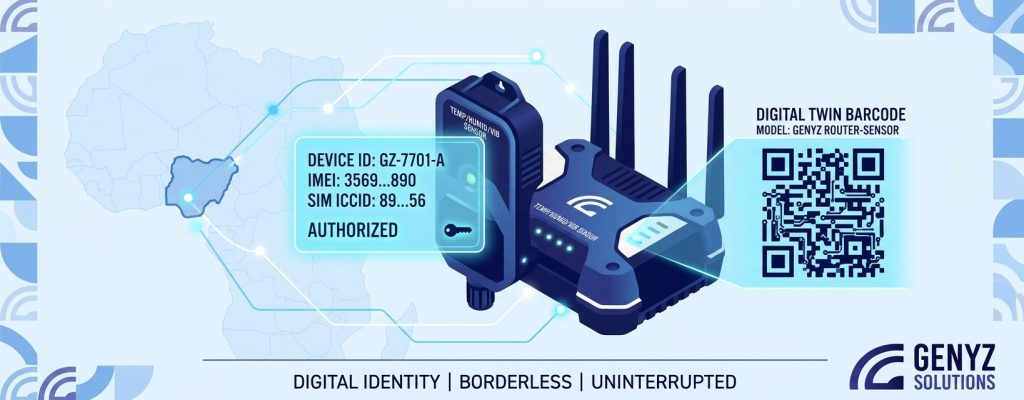
Nigerian businesses are deploying connected devices faster than ever, point-of-sale terminals in retail chains, tracking units on logistics fleets, and sensors on farms. But every one of those devices carries a 15-digit code that determines whether it ever gets online at all. If you’re running an IMEI number search because a device won’t authenticate, or you’re planning an IoT rollout and want to get device management right from day one, this guide breaks down exactly what an IMEI is, why it matters for IoT connectivity, and how it fits into a reliable multinetwork SIM strategy.
1. What Is an IMEI Number?
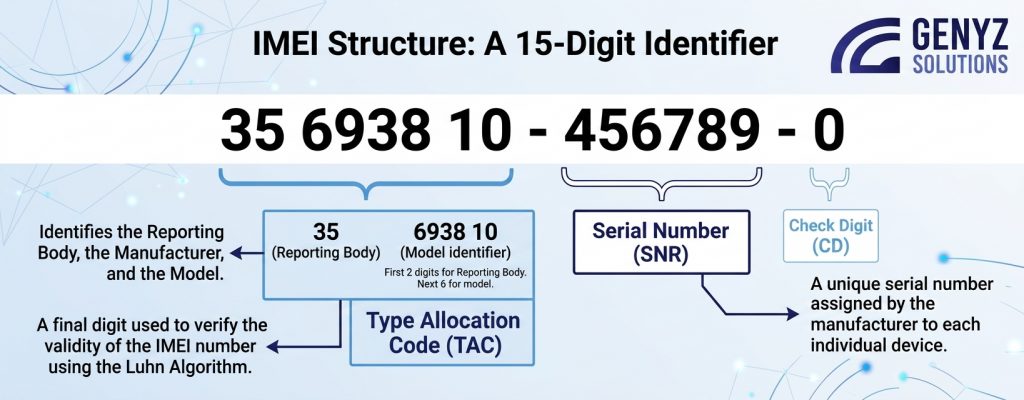
An IMEI (International Mobile Equipment Identity) is a unique 15-digit identifier assigned to every cellular-connected device not just smartphones, but IoT hardware like payment terminals, asset trackers, and remote monitoring sensors. Unlike a SIM card, which is tied to a network subscription, the IMEI is permanently tied to the physical device itself.
The number breaks down into three parts: an 8-digit code identifying the manufacturer and model, a 6-digit serial number unique to that unit, and a final check digit used to validate the sequence. Mobile network operators use this structure to confirm a device is genuine and approved before letting it connect. For any business running IoT connectivity in Nigeria across multiple carriers or a single dominant network the IMEI is the first checkpoint a device passes through before it can transmit data at all.
2. Why IMEI Matters for IoT Connectivity in Nigeria
Nigeria’s network landscape presents real challenges: patchy rural coverage, regional signal strength differences, and the operational cost of keeping devices online across multiple states. This is where universal SIM and multinetwork SIM solutions come in, SIMs that can switch between carriers automatically to maintain connectivity. But a roaming SIM is only half the picture. Every device on that SIM still needs a valid, authorized IMEI, or the network authorization fails regardless of which carrier the SIM connects through.
For companies running large IoT projects, say, hundreds of remote monitoring units across agricultural or logistics operations pairing a multi-carrier connectivity solution with proper IMEI tracking means devices can move between network towers, states, or even providers without losing authorization. It’s the combination of flexible SIM connectivity and verified device identity that makes large-scale African IoT deployments actually reliable.
3. How to Find and Manage IMEI Numbers Across a Device Fleet
For a handful of devices, checking an IMEI is simple: it’s usually printed on a label near the SIM slot, listed on the packaging, or retrievable through the device’s firmware interface using a command like AT+CGSN. But most businesses aren’t deploying one device they’re deploying hundreds or thousands.
At that scale, manual checks aren’t practical. A proper SIM management platform should let operations teams pull IMEI data programmatically, export full device inventories, and cross-reference which SIMs are linked to which hardware. This becomes essential for device connectivity management once a fleet spans multiple sites or even multiple countries. Businesses running Lagos IoT deployments alongside operations in Ghana or Kenya need one dashboard view, not a spreadsheet per region.
4. Business Benefits: What Getting IMEI Management Right Actually Saves You
Skipping proper IMEI checks is expensive in ways that only show up after deployment. A device that arrives with a blacklisted or invalid IMEI simply won’t connect, meaning a technician trip, a replacement unit, and lost operating days, all multiplied across however many units failed the same way.
Verifying IMEIs before activation, and monitoring them afterward, protects against three costs specifically: wasted hardware spend on units that can’t be authorized, downtime while field teams troubleshoot connectivity that was never going to work, and reputational cost when a client-facing deployment (a bank’s POS network, a logistics tracking rollout) stalls at launch. For Nigerian businesses budgeting in naira per device per month, a single unnecessary field visit to swap out a bad unit can easily wipe out a quarter’s worth of connectivity savings from choosing a cheaper SIM plan.
5. IMEI in Practice: Nigerian and African IoT Applications
Across sectors, IMEI management shows up as a quiet but critical part of daily operations. Banking partners running agent-banking POS terminals across dozens of Nigerian states rely on verified device identity to keep transaction terminals authorized and traceable; a requirement banking institutions have built into their agent networks. Logistics operators tracking vehicle fleets across Nigeria and neighboring markets use IMEI-linked asset trackers to maintain visibility even as devices move between network zones. Agricultural monitoring projects deploying remote sensors across rural farmland depend on the same authorization layer to keep low-power devices online in areas with inconsistent coverage.
In each case, the underlying pattern is the same: a multinetwork SIM keeps the connection resilient, while IMEI verification keeps the device itself accountable and trusted on the network.
6. Choosing an IoT Connectivity Partner That Gets IMEI Management Right
Not every connectivity provider treats IMEI management as a core part of the service. When evaluating a partner for IoT connectivity in Nigeria, ask specifically:
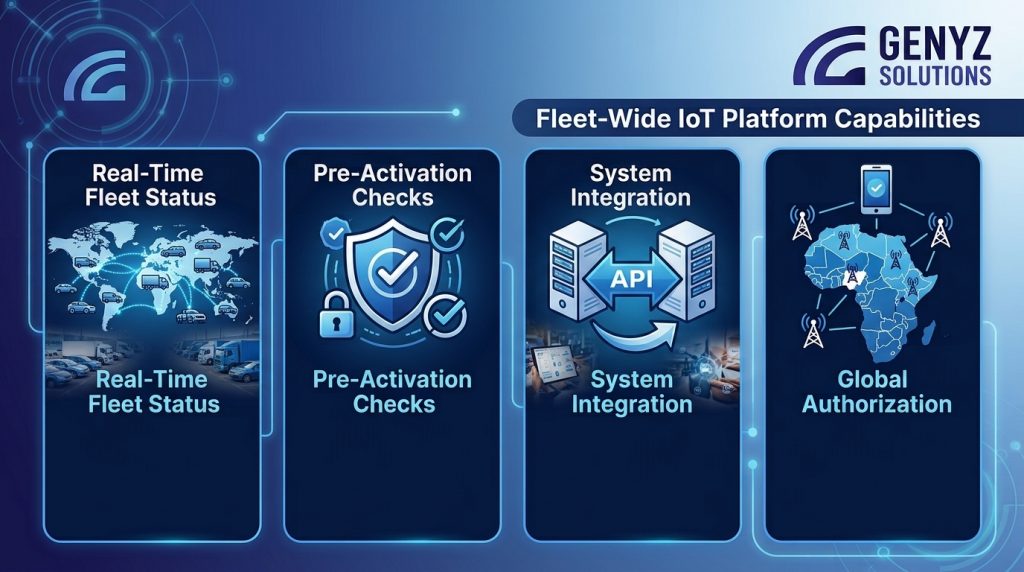
- Can the platform show real-time IMEI-to-SIM linking status across your whole fleet, not just individual lookups?
- Does the provider run blacklist checks before activation, or only after a device fails to connect?
- Can IMEI data be exported or queried via API for integration with your own systems?
- Does the SIM offering support genuine multi-carrier roaming across the specific Nigerian and African regions you operate in, so device authorization holds up as devices move?
A provider that can’t answer these clearly is likely to leave IMEI management as your team’s manual problem rather than a managed part of the connectivity service.
7. The Regulatory and Connectivity Outlook for Nigerian IoT
Nigeria’s IoT sector continues to expand alongside growing regulatory attention from the Nigerian Communications Commission (NCC), which has increased focus on device type-approval and network authorization standards as connected-device volumes rise. As more Nigerian and African enterprises scale IoT deployments — from smart metering to fleet telematics, expect device authorization and IMEI verification to become a more explicit part of compliance conversations, not just a technical afterthought.
For businesses planning ahead, building IMEI verification into procurement and onboarding now, rather than retrofitting it later, positions IoT projects in Nigeria to scale without last-minute compliance surprises.
Getting IMEI Management Right, From Day One
An IMEI number might look like a small technical detail, but for any business running connected devices in Nigeria, it’s the difference between a fleet that activates smoothly and one that stalls at launch. Combined with a genuine multinetwork SIM strategy, proper IMEI verification keeps IoT deployments reliable, compliant, and cost-predictable — whether you’re running ten devices or ten thousand.
Ready to simplify device and connectivity management for your next IoT project? Talk to Genyz Solutions about universal SIM and multinetwork connectivity built for Nigerian and African business realities — get in touch with our team to discuss your deployment.